Mosquitoes
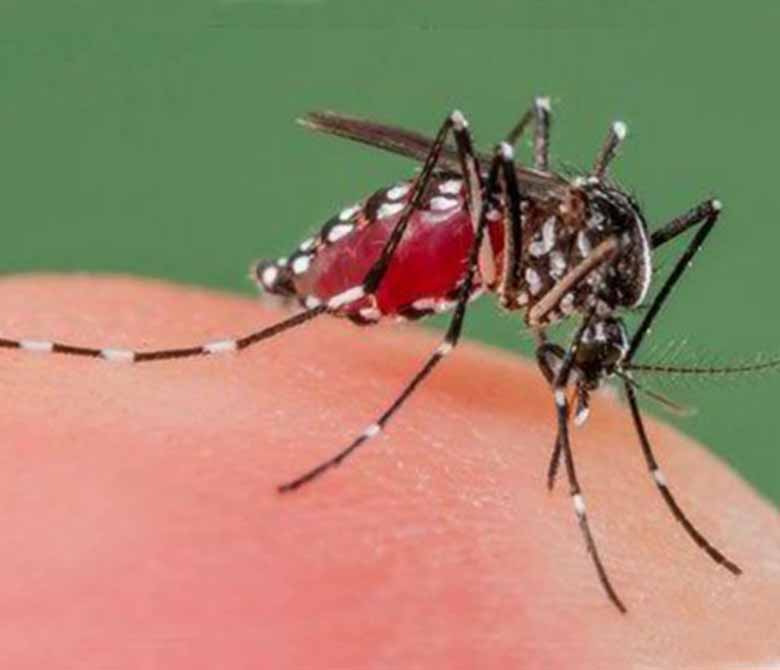
- Adults 1/8 - 3/8" long
- Body and legs covered with scales
- Mostly gray to dark, some marked with white, silver, green or iridescent blue scale
- Head with long beak
- Antennae 15-segmented, feathery in male, hairy in female
- Two pairs of wings, long and narrow, scales along veins and wing margin
- Habitat: Outdoors: Ponds, lakes, leaves of plants, and tree holes, etc.
- Activity: Eggs deposited on water, in rafts on water, moist soils near water
- Immature mosquitoes (egg, larva, pupa) cannot breathe underwater
- Prefer stagnant water when depositing eggs
- Diet: Feed at dawn and dusk for a few hours on blood of animals or humans
- Locate food source using their antennae to detect carbon dioxide
- Control by eliminating high producing areas via habitation modification by reducing mosquito resting areas and prevent stagnant water
- Use of proper labeled pesticide application
- When using pesticides treat under and at the roots of bushes and shrubs whre moisture is usually collected
- Treat under low laying trees around the perimeter of the home to build a protective barrier and lessen activity in the yard
Bed Bugs
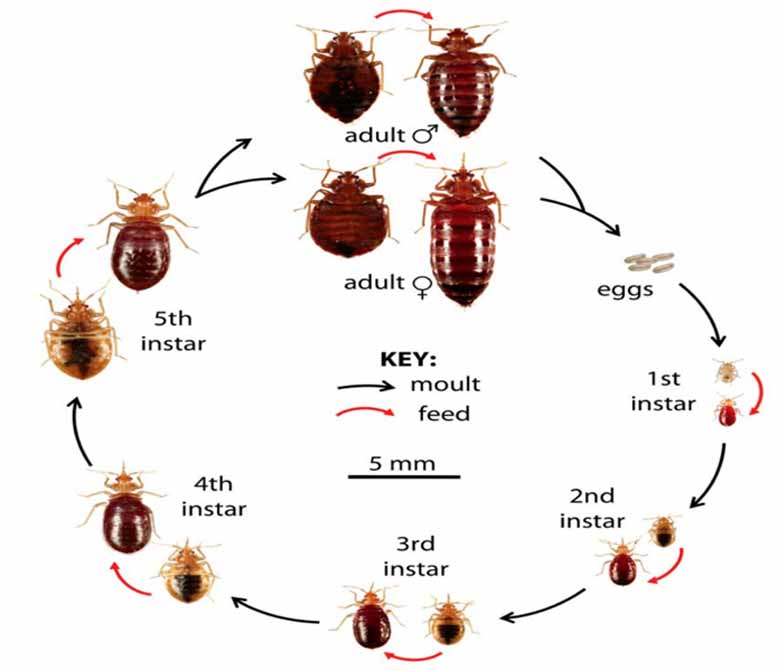
- Adults about 4 to 5mm long (size of an apple seed)
- Broadly oval and flattened body that is wingless
- Color brown to reddish brown (after feeding)
- Antenna 4-segmented, 3rd segment longer than 2nd and 4th segment
- Nymphs are white just after molting and then light tan in color before feeding
- They go through 5 stages of 'instar' which is a development phase of an insect before they can become an adult
- Diet: Their preferred hosts are humans and they tend to feed on any bare skin that is exposed while sleeping
- They have been known to survive up to a year without a meal
- Habitat: Females lay 1-5 eggs per day
- Eggs can be found in cracks or white surfaces and secured with a transparent cement for an average total of 200-500 eggs per year
- Bed bugs are hitchhikers that can easily be transported on humans, furniture or belongings, or on someone who has been living or visiting a bed bug infested situation
- Can be found in box springs, bedding, dressers, picture frames, and almost anywhere else
- Control: Thoroughly INSPECT. Look for fecal matter, blood stains and eggs
- Vacuuming carpet, bedding, drapery, and furniture helps loosen any eggs in hard to reach places
- High heat or dry cleaning to clothes, bedding, and drapery, play a key role in the treatment process
- Treat areas such as framework of couches and beds, under baseboards, the tac-strip area under carpets and voids including outlet boxes
- DO NOT treat any areas of the bed or couch, where humans are likely to contact
- Aerosols and liquids are best but dusts are better for certain hard to reach places where bed bugs hide or lay eggs such as electrical outlets
- Customers have to follow the bed bug preparation checklist for the treatment to be thoroughly effective